Sweeping / Mopping.
Regular sweeping extends floor life, supports healthier indoor air quality, and makes spaces more inviting for residents, employees, and customers. Our teams combine attention to detail with efficient techniques to ensure every space looks its best — ready for use and built to last.
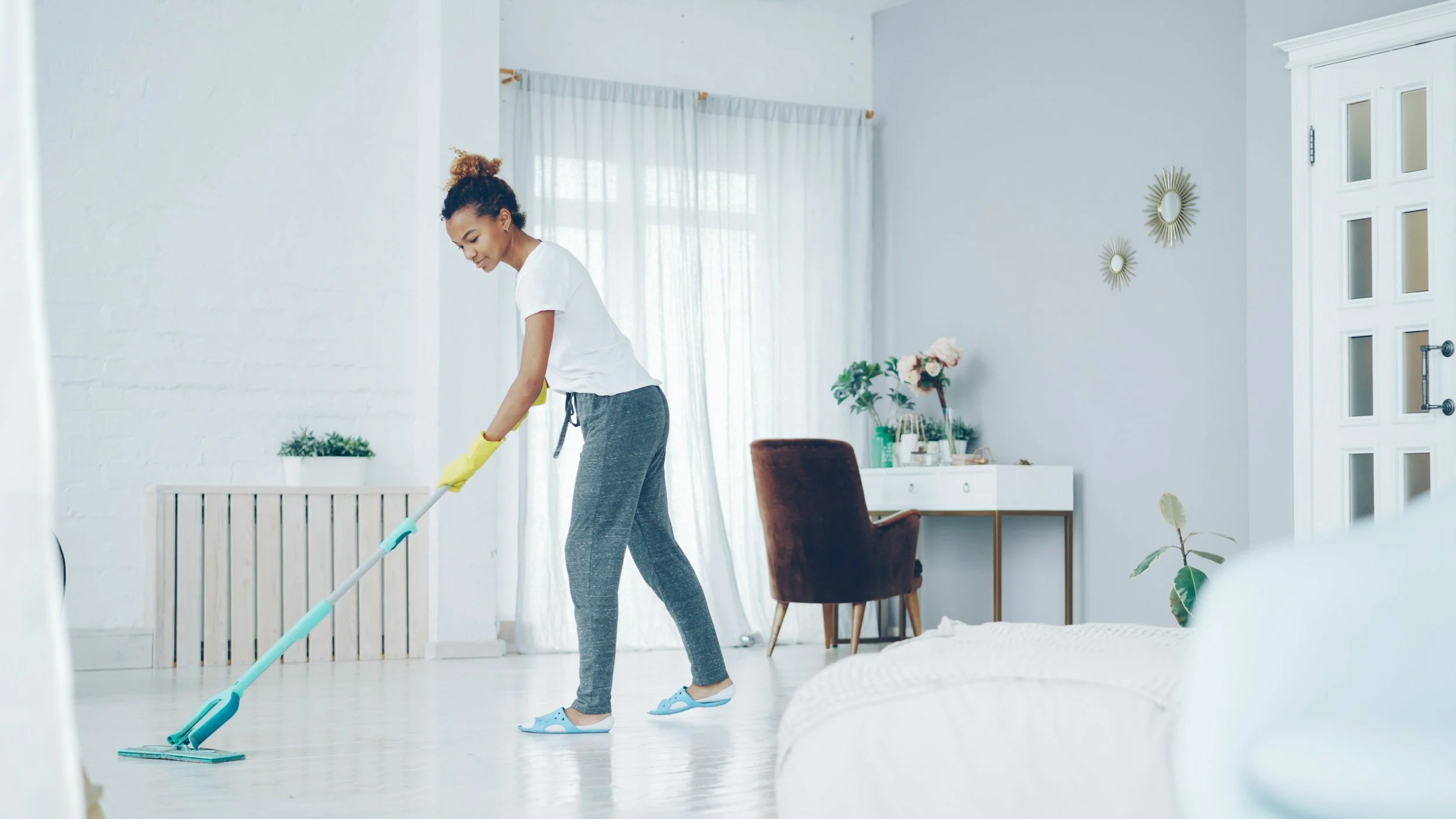
Professional sweeping and mopping performed by trained technicians using the right tools, techniques, and products can remove dirt, dust, debris, and surface contaminants while protecting the floor’s finish and extending its life.
Professional sweeping involves
Assessment: Inspecting floor types (hardwood, tile, vinyl, concrete) and identifying problem areas such as high-traffic zones, corners, and baseboards.
Equipment selection: Using commercial-grade brooms, dust mops, and HEPA-filter vacuums appropriate for the surface to capture fine dust and allergens rather than pushing them around.
Technique: Employing systematic patterns (e.g., perimeter-first, then sectional passes) to ensure full coverage and avoid recontamination.
Detailing: Addressing edges, under furniture, and transition strips; removing debris from drains and entryways as needed.
Professional mopping involves
Surface-specific product choice: Selecting cleaning solutions and dilution rates safe for the floor material and finish (pH-neutral cleaners for wood, appropriate degreasers for tile).
Proper tools: Using microfiber mops, flat mops, or microfiber pads and string mops when suitable; using wringers or two-bucket systems to control moisture.
Technique and sequencing: Mopping in overlapping passes, working from cleanest to dirtiest areas, and avoiding excess water that can damage floors or create slip hazards.
Rinsing and drying: Where required, rinsing to remove residue and using air movers or microfiber cloths to speed drying and reduce streaks.

Benefits of professional sweeping and mopping
Improved appearance: Floors look consistently clean and well-maintained, enhancing the overall impression of a facility.
Health and hygiene: Effective removal of dust, allergens, and pathogens reduces respiratory irritants and surface-borne contaminants, supporting a healthier indoor environment.
Floor protection and lifespan: Proper cleaning methods and correct product use prevent surface damage, finish degradation, and premature replacement, saving money over time.
Safety: Regular removal of dust, spills, and debris lowers slip-and-fall risks and keeps walkways clear.
Efficiency and consistency: Trained technicians deliver reliable results more quickly and thoroughly than ad-hoc cleaning, with established schedules and quality control.
Cost-effectiveness: Preventive, professional maintenance reduces the need for intensive restorative cleaning or repairs.
Tailored care: Professionals adapt routines to specific floor types and business needs (e.g., retail rush hours, healthcare infection control), balancing appearance, safety, and longevity.